
Welcome to the world of Artificial intelligence in engineering, where innovation meets technology in the most fascinating ways. From transforming traditional practices to enhancing efficiency, this topic will take you on a thrilling journey through the realm of AI in the engineering industry.
Get ready to explore the endless possibilities and groundbreaking advancements that AI brings to the table in the field of engineering.
Overview of Artificial Intelligence in Engineering
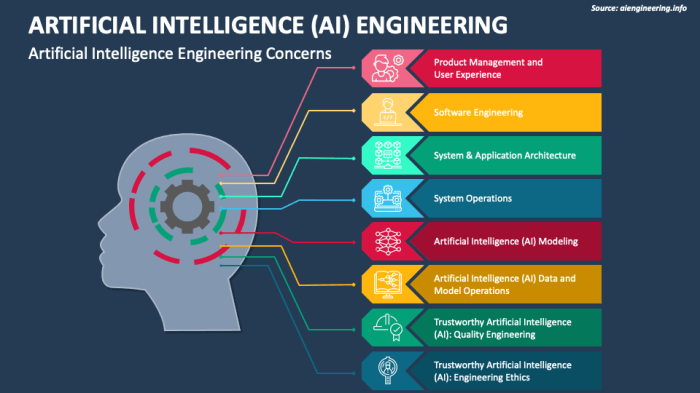
Artificial intelligence (AI) has revolutionized the engineering industry by enhancing efficiency, accuracy, and innovation in various sectors. By leveraging AI technologies, engineers can optimize processes, improve decision-making, and develop advanced solutions to complex problems.
Examples of AI in Engineering Sectors
- AI-powered predictive maintenance systems in manufacturing plants analyze data to anticipate equipment failures and reduce downtime.
- In civil engineering, AI is used for structural analysis, design optimization, and construction planning to streamline projects and ensure safety.
- In the automotive industry, AI enables autonomous vehicles to navigate roads, detect obstacles, and make real-time decisions for safe driving.
Benefits of Integrating AI into Engineering Processes
- Enhanced efficiency: AI algorithms can automate repetitive tasks, optimize workflows, and accelerate project timelines.
- Improved accuracy: AI systems can analyze vast amounts of data with precision, minimizing errors and enhancing decision-making.
- Innovation and creativity: AI tools enable engineers to explore new design possibilities, solve complex problems, and push the boundaries of traditional engineering practices.
Applications of AI in Engineering
AI technology has revolutionized the field of engineering by offering innovative solutions to complex problems. From design optimization to predictive maintenance and automating repetitive tasks, AI is playing a crucial role in enhancing efficiency and productivity in various engineering processes.
Design Optimization and Product Development
AI is extensively used in design optimization and product development to streamline the process and improve outcomes. By leveraging machine learning algorithms, engineers can analyze vast amounts of data to identify patterns and optimize designs for better performance. AI-powered tools help in creating more efficient and cost-effective products by simulating various scenarios and predicting the impact of design changes.
Predictive Maintenance for Machinery and Equipment
One of the key applications of AI in engineering is predictive maintenance for machinery and equipment. By utilizing sensors and data analytics, AI systems can predict when a machine is likely to fail and schedule maintenance proactively. This approach helps in preventing costly breakdowns, minimizing downtime, and extending the lifespan of equipment, ultimately leading to significant cost savings for businesses.
Automating Repetitive Tasks in Engineering Workflows
AI plays a crucial role in automating repetitive tasks in engineering workflows, allowing engineers to focus on more complex and creative aspects of their work. By using robotic process automation (RPA) and cognitive technologies, AI systems can perform routine tasks such as data entry, documentation, and quality control with high accuracy and efficiency. This not only saves time but also reduces the risk of errors, ensuring better overall quality in engineering projects.
Challenges and Limitations of AI in Engineering
Artificial Intelligence (AI) has revolutionized the engineering industry, but it also comes with its own set of challenges and limitations. Let’s explore some of the key issues faced when implementing AI technologies in engineering projects and the ethical considerations associated with AI applications in this sector.
Challenges in Implementing AI in Engineering
- Lack of Data Quality: AI algorithms heavily rely on quality data for accurate results. In engineering, obtaining clean and relevant data can be a challenge, leading to biased outcomes.
- Interpretability: Complex AI models often lack transparency, making it difficult for engineers to understand how decisions are being made. This can hinder trust in the technology.
- Integration with Existing Systems: Incorporating AI tools into existing engineering workflows and systems can be complex and time-consuming, requiring significant changes and adaptations.
- Cost and Resources: Implementing AI technologies in engineering projects can be costly, requiring investments in infrastructure, training, and maintenance.
Benefits and Limitations of Using AI for Engineering Problem-Solving
- Benefits:
- Rapid Problem-Solving: AI can analyze vast amounts of data quickly, helping engineers identify patterns and solutions faster than traditional methods.
- Improved Efficiency: Automation of repetitive tasks through AI can free up engineers to focus on more complex and creative aspects of their work.
- Limitations:
- Dependence on Data Quality: AI’s effectiveness is directly linked to the quality and quantity of data available. Inaccurate or insufficient data can lead to flawed results.
- Lack of Creativity: While AI excels at optimizing processes based on existing data, it may struggle with innovative problem-solving that requires human creativity and intuition.
Ethical Considerations in AI Applications for Engineering
- Privacy Concerns: AI systems in engineering may collect and process sensitive data, raising concerns about privacy protection and data security.
- Biased Algorithms: Unconscious biases in AI algorithms can perpetuate social inequalities and lead to unfair outcomes in engineering applications.
- Job Displacement: The automation of tasks through AI technologies may result in job losses for engineering professionals, requiring retraining and upskilling.
Future Trends and Innovations
Artificial Intelligence (AI) is rapidly evolving and revolutionizing the field of engineering. Let’s explore some of the emerging trends that are shaping the future of engineering practices.
Advancements in Smart Infrastructure
In the future, AI is expected to play a crucial role in the development of smart infrastructure. This includes the use of AI-powered sensors and systems to monitor and optimize the performance of buildings, bridges, and other structures in real-time. By leveraging AI, engineers can enhance the efficiency, safety, and sustainability of infrastructure projects.
Sustainable Engineering Solutions
AI is also making significant contributions to the advancement of sustainable engineering solutions. Through the use of AI algorithms, engineers can analyze complex data sets to design environmentally-friendly structures and systems. AI can help optimize energy consumption, reduce waste, and minimize the environmental impact of engineering projects, leading to a more sustainable future.
Impact on Workforce and Skill Requirements
The integration of AI in engineering is reshaping the workforce and skill requirements in the sector. As AI technologies become more prevalent, engineers will need to develop new skills in data analytics, machine learning, and programming to effectively leverage AI tools in their work. Additionally, AI may automate certain tasks traditionally performed by engineers, leading to a shift in job roles and responsibilities within the industry.
Artificial Intelligence in the Engineering Industry
Artificial Intelligence (AI) is transforming traditional engineering practices by introducing innovative technologies that enhance productivity, efficiency, and creativity within the industry.
Revolutionizing Engineering Practices
AI is revolutionizing engineering practices by automating repetitive tasks, analyzing complex data sets, and optimizing processes. Machine learning algorithms enable engineers to make data-driven decisions, leading to improved designs and faster problem-solving.
Enhancing Productivity and Efficiency
AI-driven technologies such as predictive maintenance systems, digital twins, and autonomous robots are enhancing productivity and efficiency in engineering operations. These tools enable real-time monitoring, predictive analytics, and autonomous decision-making, reducing downtime and optimizing resource utilization.
Fostering Innovation and Creativity
AI plays a crucial role in fostering innovation and creativity within the engineering industry by enabling engineers to explore new design possibilities, simulate and test different scenarios, and rapidly prototype ideas. By leveraging AI tools, engineers can push the boundaries of what is possible and develop cutting-edge solutions to complex challenges.
Closure
As we wrap up our discussion on Artificial intelligence in engineering, it’s clear that the future is bright with endless opportunities for growth and innovation. With AI revolutionizing the way we approach engineering challenges, the possibilities are truly limitless.
FAQ Explained
How is AI impacting design optimization in engineering?
AI is revolutionizing design optimization by streamlining the process, reducing errors, and enhancing overall efficiency.
What are the key benefits of integrating AI into engineering processes?
Integrating AI leads to increased productivity, faster problem-solving, and enhanced innovation within the engineering industry.
What challenges are faced in implementing AI technologies in engineering projects?
Challenges include data privacy concerns, initial setup costs, and the need for specialized AI talent.
How does AI contribute to advancements in smart infrastructure?
AI enables predictive maintenance, real-time monitoring, and data-driven decision-making for smart infrastructure development.
What role does AI play in fostering innovation within the engineering industry?
AI sparks creativity, enhances problem-solving capabilities, and drives technological advancements in engineering innovation.


